

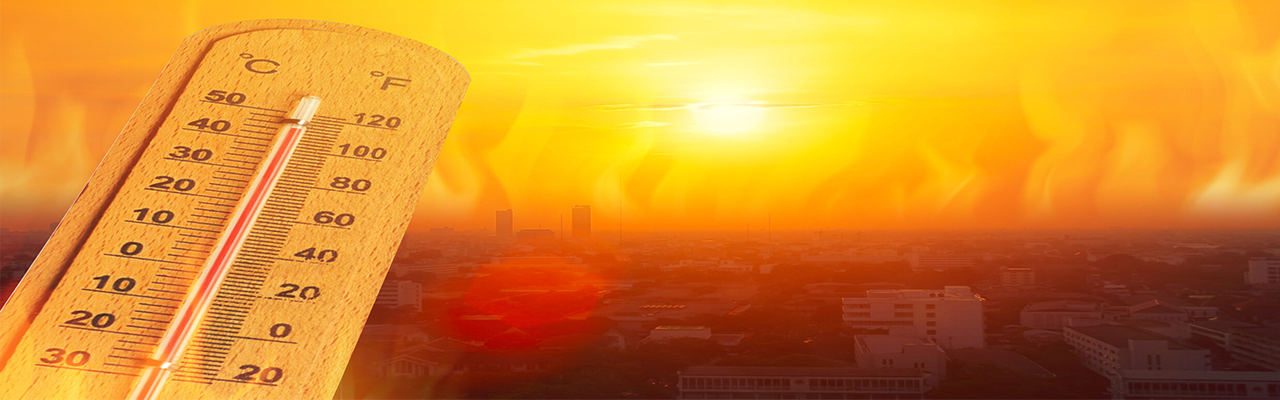
British Columbia’s summer temperatures are increasing. With the impact of climate change, periods of higher temperatures may become more frequent and last longer. We want to be prepared for extreme heat events and reduce the impact and risk to our health. We can do this by:
- understanding which groups in our community are at the highest risk;
- taking steps to prepare ourselves and our homes; and
- being aware of the signs of heat related illness.
What is an extreme heat event?
Extreme heat events (commonly referred to as heat waves) involve high temperatures and may be combined with high humidity. They are usually experienced between May and September. In our region – Vancouver’s Lower Mainland – heat alerts have 2 stages:
- Level 1: Heat Warning (very hot): 2 or more consecutive days of daytime maximum temperatures of 29°C (or warmer) and nighttime temperatures of 16°C (or warmer).
- Level 2: Extreme Heat Emergency (dangerously hot): Heat warning criteria is met, plus daily highs will continue to increase for 3 or more consecutive days.
Who is at risk?
Anyone can suffer from a heat-related illness, but there are groups in our communities who are at higher risk than others. Heat-vulnerable groups include:
- People over 50. The body’s ability to cool itself is impaired as we age; temperatures over 31° can overwhelm our body’s natural cooling systems.
- People who live alone or are socially isolated, as heat illness is often not noticed by those who have it.
- People with pre-existing health conditions, such as diabetes, heart disease or respiratory disease.
- People with mental illness, such as schizophrenia, depression or anxiety.
- People with substance use disorders, including alcohol.
- People with limited mobility.
- People who are marginally housed.
- People who are pregnant.
- Infants and young children, as they depend on adults to keep them cool and hydrated.
- People who overexert themselves during work or exercise, and especially when working outdoors or in hot indoor environments.
How to prepare
Make your plan
Determine if you can stay at home
If you are at risk and you live in a building or residence that gets very hot, with sustained internal temperatures of 31 degrees or higher, plan to go elsewhere during extreme heat.
Identify your home’s cool zones
You should prepare to stay in the coolest part of your residence and focus on keeping that one location cool. Start by identifying a room that’s typically coolest and consider how you can modify the layout to support sleeping and day-to-day living for the duration of the heat event.
Have a buddy system
Check twice a day on friends and family members who are elderly or have unique needs.
Know the location of cooling spaces on the North Shore
When temperatures soar, consider visiting community locations that are cool or air conditioned. For locations on the North Shore, please visit:
Be sure to call the location or check online for hours of operation.
Gather your supplies
Have the following on hand before a heat event:
- Indoor digital thermometer
- Spray bottle or mister
- Refillable water bottle
- Electrolyte powder
- A fan* and / or portable air conditioner
- Loose, breathable, natural fibre clothing (e.g., cotton, linen)
*Fans cannot effectively reduce body temperatures or prevent heat-related illness in people at-risk. Do not rely on fans as your primary cooling method during an extreme heat event.
Prepare your home
A few modifications can make a big difference during periods of extreme heat. Options include:
- Install exterior covers or reflective films that block the sun from hitting the windows. This can be as simple as applying cardboard to the outside of the window.
- Install interior window coverings. Block the sun’s warming rays using blinds, heavy curtains, thermal curtains or reflective film.
- Install a window air conditioner in at least one room. Visit BC Hydro to learn about its free portable air conditioner program for income-qualified households.
- Install a heat pump. Visit CleanBC Better Homes for information.
- Keep easy-to-read digital thermometers available to accurately measure indoor temperatures (31°C or higher is dangerous for heat-vulnerable people).
- Have fans* to help move cooler air indoors during the late evening and early morning hours.
*Fans cannot effectively reduce body temperatures or prevent heat-related illness in people at-risk. Do not rely on fans as your primary cooling method during an extreme heat event.
What to do during extreme heat
Stay cool inside
- Monitor indoor temperatures: heat risks increase at 26°C, and significantly increase at 31°C. Consider staying with family or friends if you are in a heat-vulnerable group and live in a building where inside temperatures might be above 31°C.
- Cover windows that receive morning or afternoon sun with drapes, shades, or awnings.
- If you have air conditioning, turn it on. It does not need to be going full strength to help you stay cool. Invite friends and family who do not have air conditioning to your home.
- If you do not have air conditioning, move to your pre-identified alternate location with air conditioning or cooler spaces.
- Limit stove or oven use.
- Wear loose natural fibre clothing that breathes well.
- Take cool baths or showers to draw heat from your body.
- Sleep with a wet sheet or in a wet shirt and in the coolest room of your residence. If it’s cooler outside, sleep outside if safe to do so.
- Drink plenty of water, regardless of whether you feel thirsty. Be aware that sugary or alcoholic drinks cause dehydration.
- If you are taking medication or have a health condition, ask your doctor or pharmacist if it increases your health risk in the heat and follow their recommendation.
- If your doctor limits the amount you drink or has you on water pills, ask how much you should drink when the weather is hot.
Stay cool outside
- Lower your activity level.
- Reduce, eliminate, or reschedule errands or strenuous activities to the coolest time of the day.
- Never leave children or pets in a parked car.
- Avoid direct sun by staying in the shade.
- Wear a wide- brim hat, protective clothing, sunscreen and UV-protective eyewear.
- Seek cooler, breezier areas when outdoors, such as large parks near to trees and water.
- Stay in climate-controlled buildings as long as possible; find a list of North Shore cooling locations here.
- If you work in a hot environment, discuss and act on ways to decrease heat exposure with your employer and coworkers. If working outside, monitor co-workers and have them do the same for you.
Care for your pets
- Never leave pets in parked cars.
- Avoid asphalt and pavement, as those surfaces can burn paws.
- Bring pets inside during the hottest time of the day.
- Provide plenty of fresh water and shade for outdoor pets.
Heat-related illness
On hot days, your body has to work harder to maintain a normal temperature. You may find yourself breathing rapidly, feeling weak, faint, confused, or headachy. Heat exhaustion and heat stroke can follow. Heat illness has two stages – know the symptoms and act accordingly.
Heat Exhaustion
Call 8-1-1 or your health care provider if you experience or witness the following symptoms:
- Headache, dizziness, difficulty concentrating
- Rapid breathing and heartbeat
- Skin rash, heavy sweating
- Extreme thirst, nausea or vomiting
- Dark urine and decreased urination
- Muscle cramps
Anyone with these symptoms should be moved to a cool space, given plenty of water to drink, and cooled down with water applied to the skin (bath, shower, wet clothes).
Heat Stroke
Heat stroke is the most serious heat-related illness as your body is unable to control its temperature.
If you experience or witness the following symptoms, call 911 or seek medical attention. While waiting for help, submerge some or all of the body in cool water, remove clothes and apply wet towels.
- High body temperature
- Fainting or decreased consciousness
- Confusion
- Lack of coordination
- Very hot and red skin
Stay informed
Learn more about extreme heat
- North Shore Storymap/Disaster and Climate Risk Profile
- PreparedBC: Be prepared for extreme heat and drought
- BC Centre for Disease Control: Preparing for heat events
- HealthLink BC: Heat-related illness
- HealthLink BC: Beat the Heat
- Vancouver Coastal Health: Extreme Heat
- WorkSafeBC: Heat stress considerations for workers
- Get Prepared Canada: Extreme heat events
Printable resources
- NSEM’s Extreme Heat reference sheet
- NSEM and VCH Build a Cool Kit instructions
- Vancouver Coast Health Extreme Heat poster
- PreparedBC Extreme Heat Guide, available in French, Simplified Chinese, Traditional Chinese, and Punjabi