

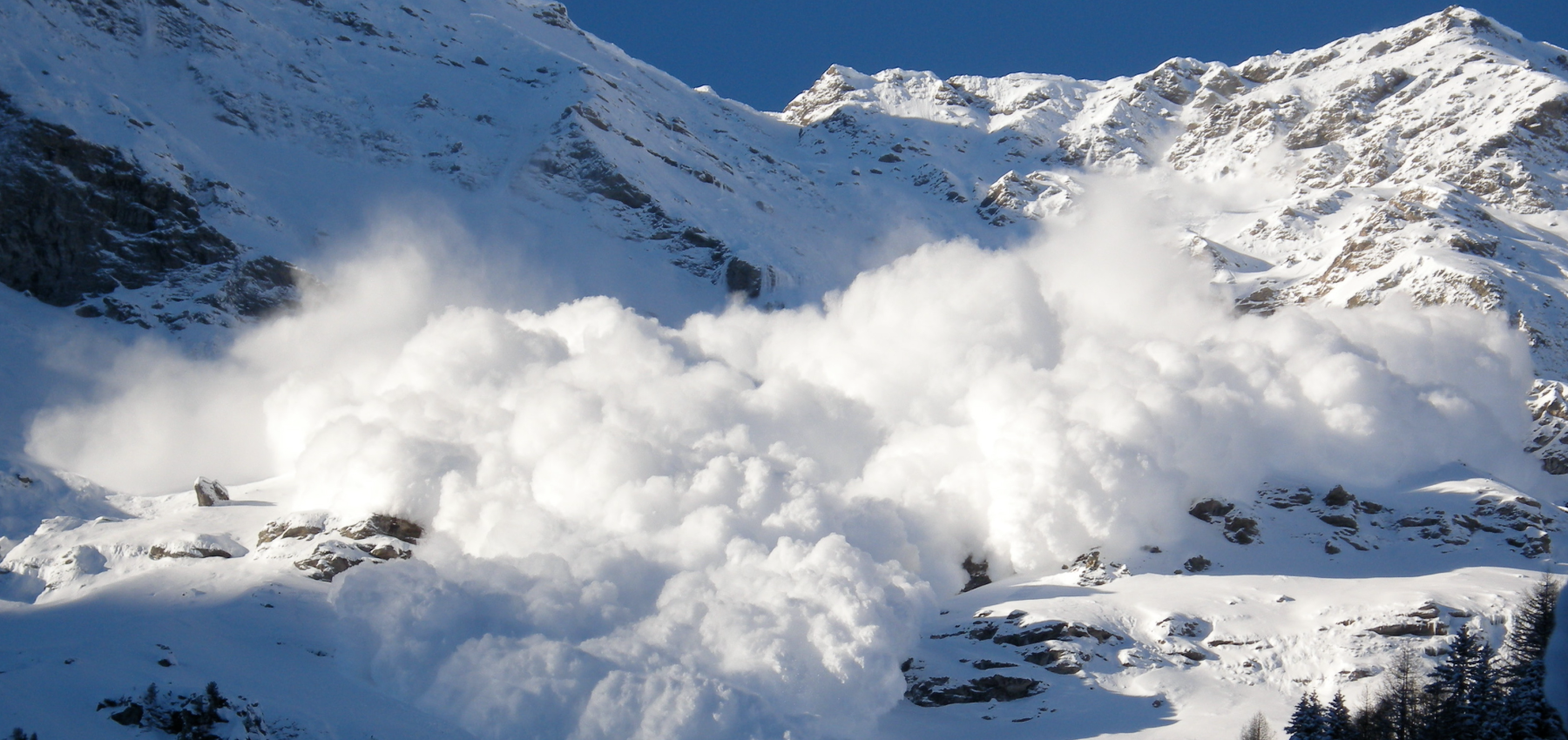
An avalanche is a mass of snow, often mixed with ice and debris, that can travel up to 90 kilometres per hour. Avalanches can occur when snow is wet, moist, or dry.
Avalanche risk in the mountains can change quickly and throughout the day depending on weather. Making informed decisions, having the proper training and equipment and choosing appropriate terrain can save lives.
How to prepare
Before heading into the backcountry
Monitor avalanche forecasts available on the Avalanche Canada website or mobile app.
- Review weather forecasts available on the Environment and Climate Change Canada website.
Always tell someone where you plan to go and when you’ll be back. Visit the AdventureSmart website for trip planning resources.
- Ensure you have avalanche safety training to manage the risks.
- Each person travelling in a group needs their own avalanche transceiver, shovel, probe and the training to know how to use these essential tools.
- If you drive, prepare an emergency kit for your vehicle.
While in the backcountry
- Be careful when in avalanche terrain. Be diligent about terrain choices. Adapt your plan to reduce exposure to avalanche terrain when conditions call for it.
- Follow disciplined group decision-making, ensuring that each group member is engaged in terrain selection.
- Travel one at a time, regroup in safe spots, and be aware of overhead hazards when exposed to avalanche terrain.
- Avoid exposure to terrain traps, such as gullies, cliffs and trees, to reduce the risks of being caught in an avalanche.
- Be aware that some avalanches can be large and may run their full path, especially in the spring or at times where weak layers are buried deeply.
What to do during an avalanche
If you are in your vehicle
- Remain in your vehicle with your seatbelt on. Drive to a safe location, if possible.
- Do not attempt to drive through an avalanche. The force and speed of an avalanche are impossible to outrun.
- Try to get to the sides of the path the avalanche is traveling down.
If you are outside
If you become caught in an avalanche, try to:
- Push machinery, equipment, or heavy objects away from you to avoid injury.
- Grab onto anything solid, such as trees or rocks, to avoid being swept away.
- Keep your mouth closed and your teeth clenched.
- If you start moving downward with the avalanche, stay on the surface using a swimming motion.
- Try to move yourself to the side of the avalanche.
When the avalanche slows, try to:
- Push yourself towards the surface.
- Make an air pocket in front of your face using one arm.
- Push the other arm towards the surface.