

Hazards such as wildfires and flooding may require people who live, work or travel on the North Shore to evacuate.
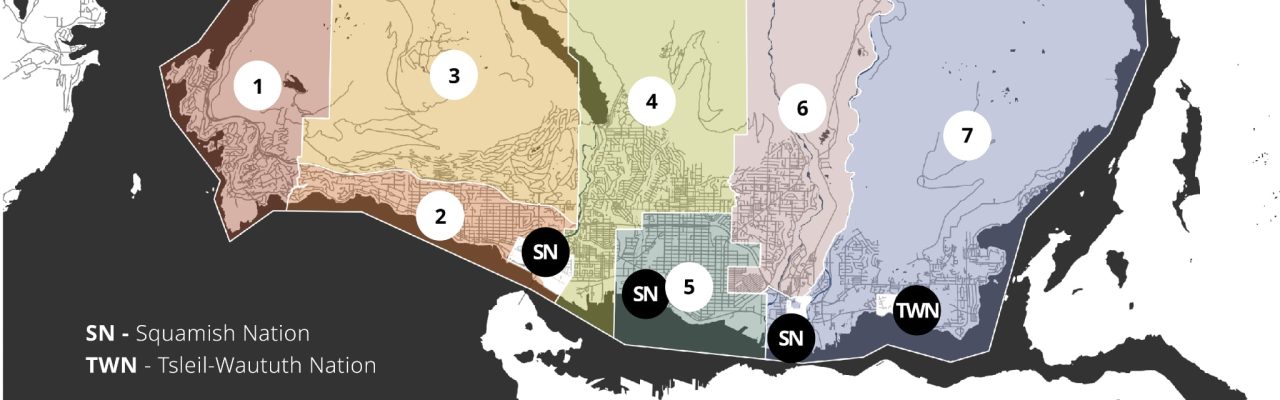
To support the safe and efficient movement of people and emergency responders during an evacuation, the North Shore is divided into 7 zones and 45 sub-zones.
- Find your zone and sub-zone
- Prepare for an evacuation
- Understand evacuation planning, including what to expect at each stage
Taking the time now will help ensure you and your loved ones know what to do when it matters most.
Find your zone and sub-zone
During an emergency, information about evacuation alerts, evacuation orders, and/or shelter-in-place orders will be displayed on the map in real-time. You will be able to locate:
- Reception centre locations
- Priority evacuation routes
- Sub-zone-specific transportation hubs if you need assistance evacuating
Quick tips
- Use the map’s zoom feature (+/-) to explore different areas of the North Shore. You can also use the map’s “Search” function (top right-hand corner) to find the zone and sub-zone of specific addresses (residence, workplace, school, childcare centre, etc.).
- Click on the “Layers” icon (top right-hand corner) for a dropdown menu where you can find a coloured legend for evacuation status, key locations for group lodging facilities, reception centres and transportation hubs, and priority evacuation routes.
- If you click on any of the icons on the map, you can then “Choose Layer to Feature Info” for information, such as wayfinding directions for reception centres or transportation hubs.
Prepare for an evacuation
Download the Be Ready to Evacuate brochure to help you plan for an evacuation. The steps are included below, in addition to key terms used during evacuation:
Knowing what to do, where to go, and who to contact will reduce stress and help keep you focused and safe. Visit our Create an Emergency Plan page for more information on building your emergency plan, including a link to PreparedBC’s online emergency planner and PDF template.
Emergency Support Services (ESS) assists people who are evacuated with basic needs, such as the costs associated with accommodation, food and incidentals. Visit our ESS page for step-by-step instructions to create a profile with the BC Services Card app.
Alertable is the official public emergency notification system used by North Shore Emergency Management on behalf of the District of North Vancouver, City of North Vancouver, and District of West Vancouver. Download the app or sign up for alerts by text, email or phone (including landlines).
Have a grab-and-go bag for every household member, including pets. Visit our How to Make an Emergency Kit page for more information, including checklists.
During an evacuation, rely on official sources for accurate information. Updates and instructions will be posted on our Real-Time Emergency Updates page and shared on social media (@NorthShoreEMO on X, Facebook and Instagram).
Your municipality will also share local updates on its website and social channels. At the provincial level, visit EmergencyInfoBC or follow them on X for broader emergency information.
Know the key terms
Be ready to leave on short notice. If you leave before or during an alert, it’s called a voluntary evacuation.
You are at risk and must leave the area immediately.
The risk to life and safety has passed, and you can return home. However, stay tuned for other possible evacuation alerts and orders.
A designated location where people under an evacuation order can gather for transport to a reception centre. A transportation hub can be used by anyone, including those without access to a private vehicle, and people will be encouraged to use them to help reduce the number of vehicles on the road.
A safe place where people who have been evacuated can access information, receive support for food, lodging and incidentals, and be reunited with family members.
A safe place where people who have been evacuated can sleep, eat and receive support.
Understand evacuation planning
Review the North Shore Evacuation Guide to learn more about what goes into evacuation planning, including the types of evacuations, the stages of an evacuation, communicating an evacuation, and key terms.
Frequently Asked Questions
Evacuations happen when emergency officials determine there is a risk to public safety. When possible, advance notice is provided to help people prepare. You will be notified through:
- Alertable and BC Emergency Alerts (depending on the situation),
- North Shore Emergency Management’s website and social media,
- Your municipality’s website and social channels.
In areas under an Evacuation Order, trained teams will go door-to-door to alert people and identify anyone who may need help evacuating.
Have an emergency grab-and-go bag packed for every member of your household, including pets. Include:
- Supplies like water, food, medications, radio, flashlight, batteries, cellphone charger, seasonal clothing, first-aid kit and cash (small bills)
- ID (driver’s license, passport) and copies of important documents like your emergency plan, birth or marriage certificates and insurance policies
- Pet supplies such as leash, carrier, food, water, photo, medication and vet records
Pets are allowed at reception centres, provided they are secured in a crate or cage. If you have a crate or cage for your pet, please bring it with you. If you do not have one, reception centre staff will work to find one.
Not all hotels and other temporary accommodations accept pets. It is important to include pets in your emergency planning and identify pet-friendly options in advance.
For livestock, alternative accommodations will be arranged with the support of provincial organizations.
Depending on the situation, you may be directed to evacuate to a safer area on the North Shore or, in some cases, off the North Shore entirely. Evacuation orders will include information on where to go, including designated reception centres and/or group lodging facilities.
Note: there are no fixed evacuation routes. The safest route will depend on the situation and the type of hazard. Any road that leads away from danger and toward safety may be used as an evacuation route.
Transportation hubs will be set up to support anyone under evacuation order, including those without access to a private vehicle. From there, you can be safely transported to a designated reception centre. If you have accessibility needs or require additional assistance, specialized teams are available to help.
Disaster response routes are roads designated for use by emergency personnel during an emergency or disaster, such as an earthquake.
They are not evacuation routes. These routes are prioritized for emergency responders so they can quickly bring in essential resources and supplies, transport injured people to hospital, access incident sites, and carry out controlled evacuations.
If you are on a designated disaster response route during an emergency, exit the route as soon as it is safe to do so and follow all directions from traffic control personnel.
Learn more about disaster response routes on the Province of British Columbia’s website.
No, you don’t have to go to a reception centre if you have a safe place to stay. However, you will be encouraged to register with the reception centre through an online portal for the purposes of evacuee sharing. If you can stay with family or friends, or arrange your own accommodations, you are encouraged to do so.
While adults have the legal right to remain on their property during an Evacuation Order, staying behind is strongly discouraged. It puts your safety—and the safety of first responders—at risk. Emergency personnel will not be able to return to assist once you’ve chosen to stay.
If you remain, you must stay on your property. Movement within the evacuation area is not permitted, and access will be controlled by emergency officials.
Children and youth under the age of 19 cannot stay behind. If a household under Order includes anyone under 19 who is not being evacuated, police are legally required to remove them for their safety.
Specialized evacuation support is available for people with accessibility needs or medical conditions.
During an evacuation, trained teams may assist individuals who require support to evacuate safely, including those with mobility, accessibility, or medical needs.
To learn about accessibility features available in public facilities and spaces (such as community centres) that may be used as reception centres or group lodging facilities, visit:
When an area is under an Evacuation Order, local authorities take steps to secure the area. Access roads are blocked by physical barriers or monitored by access control teams, who may include police, municipal staff, or contracted security personnel.
Only emergency responders, authorized utility crews, and in rare cases, individuals with access permits are allowed to enter. Mobile patrols will monitor the area while it remains safe to do so.
After the immediate danger has passed, emergency officials will assess the area to ensure it is safe for re-entry. Once an official Evacuation Rescind is issued, the re-entry phase can begin. Returning home will typically happen in phases, beginning with areas evacuated first. You will receive official updates about when and how to return through trusted channels such as Alertable, NSEM and municipal websites, and social media.
Evacuation plans and zone boundaries are regularly reviewed and updated based on new information, community growth, and lessons learned from past emergencies. Updates will be shared through official sources, including North Shore Emergency Management’s website.